Now Reading: Kiev II 1948 or Contax ?
-
01
Kiev II 1948 or Contax ?

Kiev-2 — From Contax to Soviet Camera
The story of the Kiev-2 begins with the German Contax.
After the Second World War, the Soviet Union received German industrial equipment as war reparations. Machinery, tooling and production equipment were dismantled and transferred to the Soviet Union. German engineers and skilled workers were also brought into the reconstruction of production wherever they could be found.
This was particularly important in the case of the Contax. The camera was an extremely sophisticated piece of precision engineering, and restarting its production required much more than simply moving machines from one factory to another.
The new production was established at the Arsenal factory in the centre of Kyiv.
The First Kiev-2
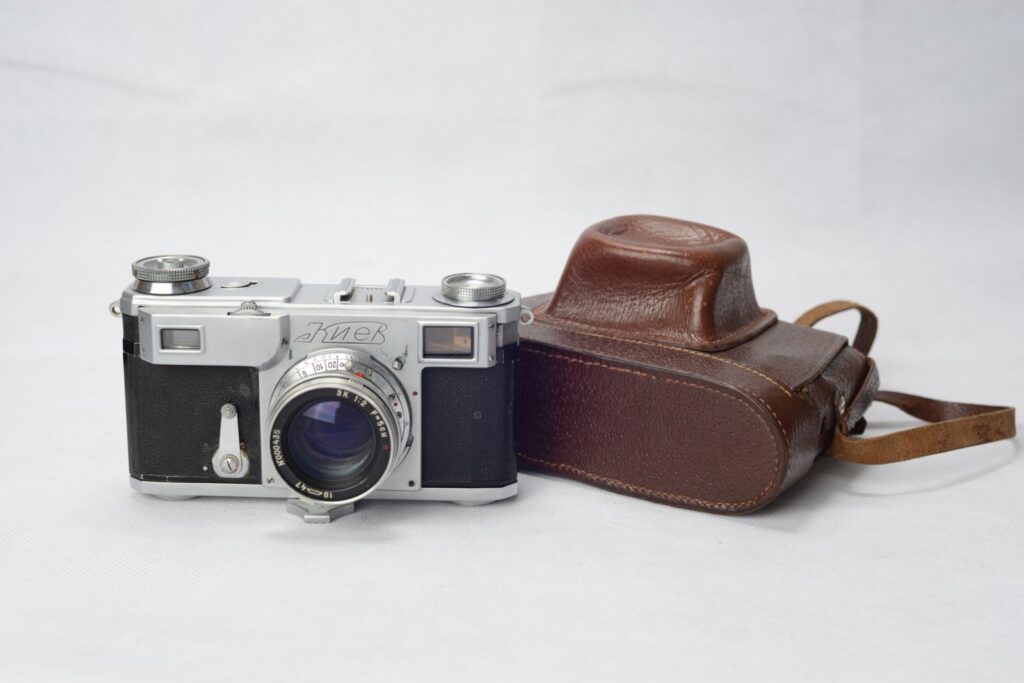
The earliest Kiev cameras, produced around 1947–1948, were assembled largely from original German Contax components and parts remaining from pre-war production.
In fact, the first Kiev-2 cameras were essentially German Contax cameras that had been given a new name.
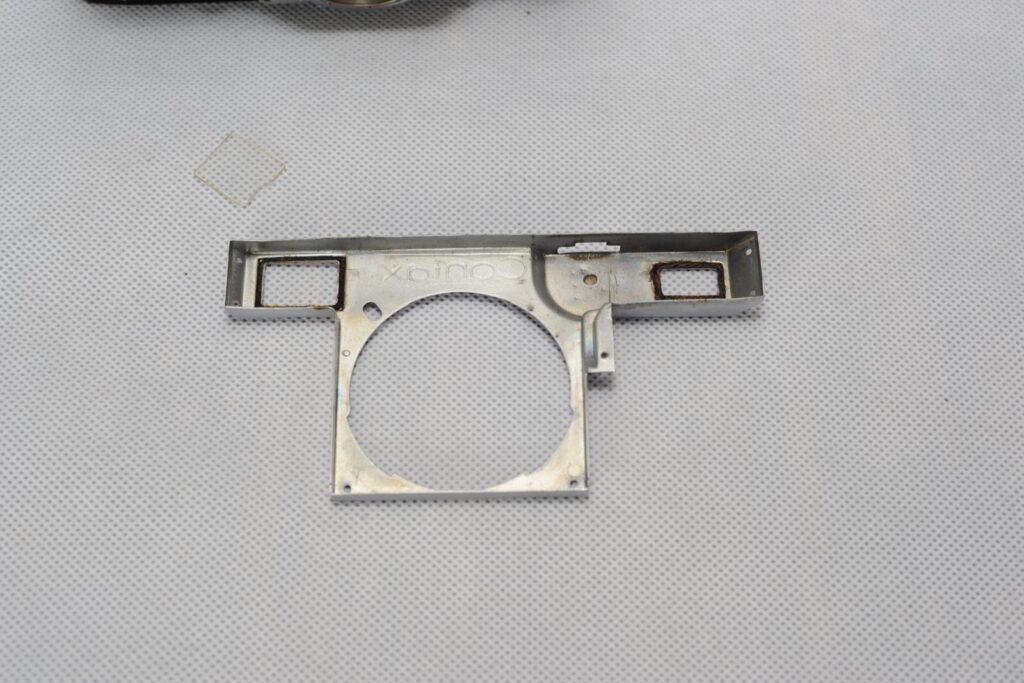
The original Contax engraving was removed from some parts and replaced with the word Kiev. But the old marking was not always completely erased.
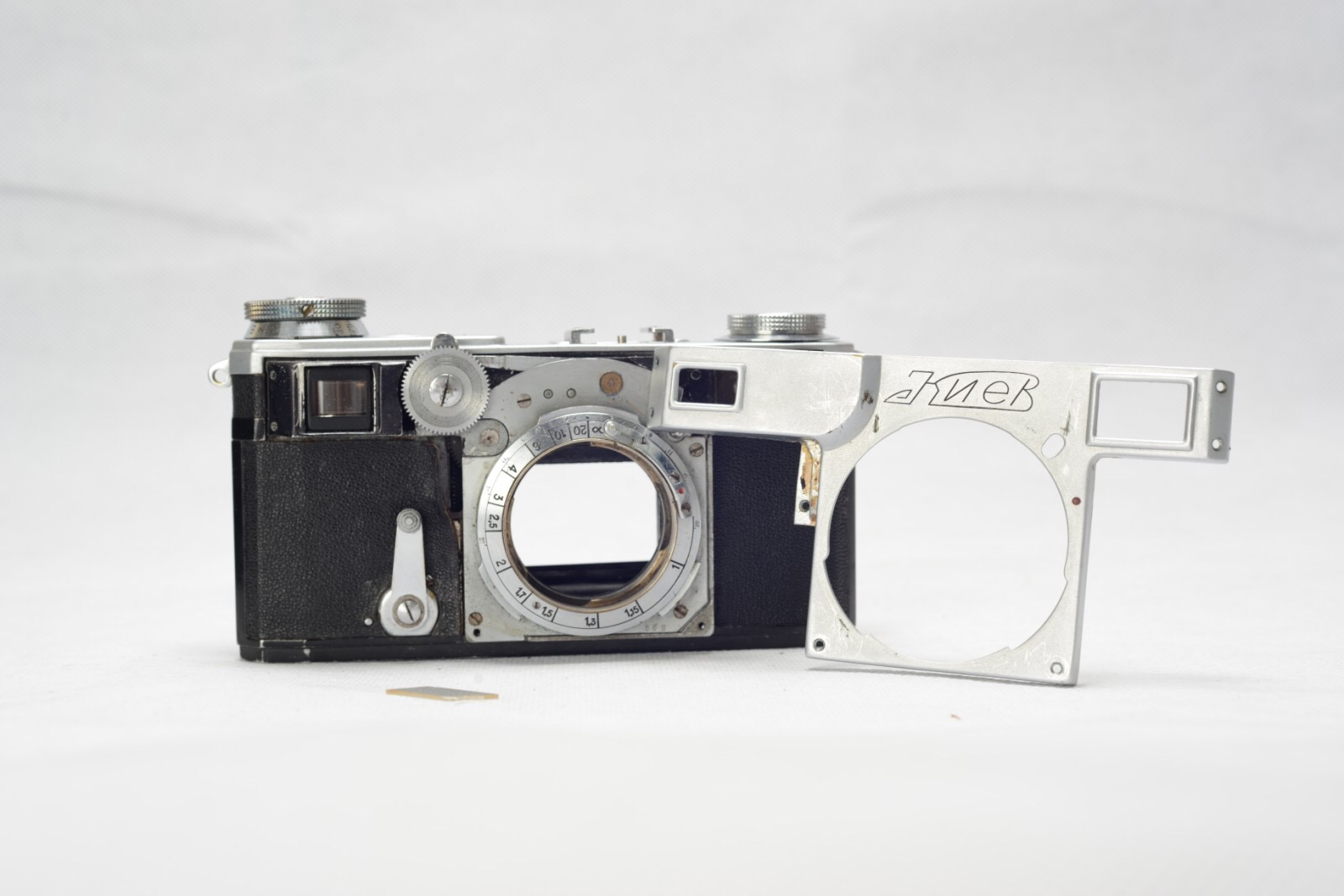
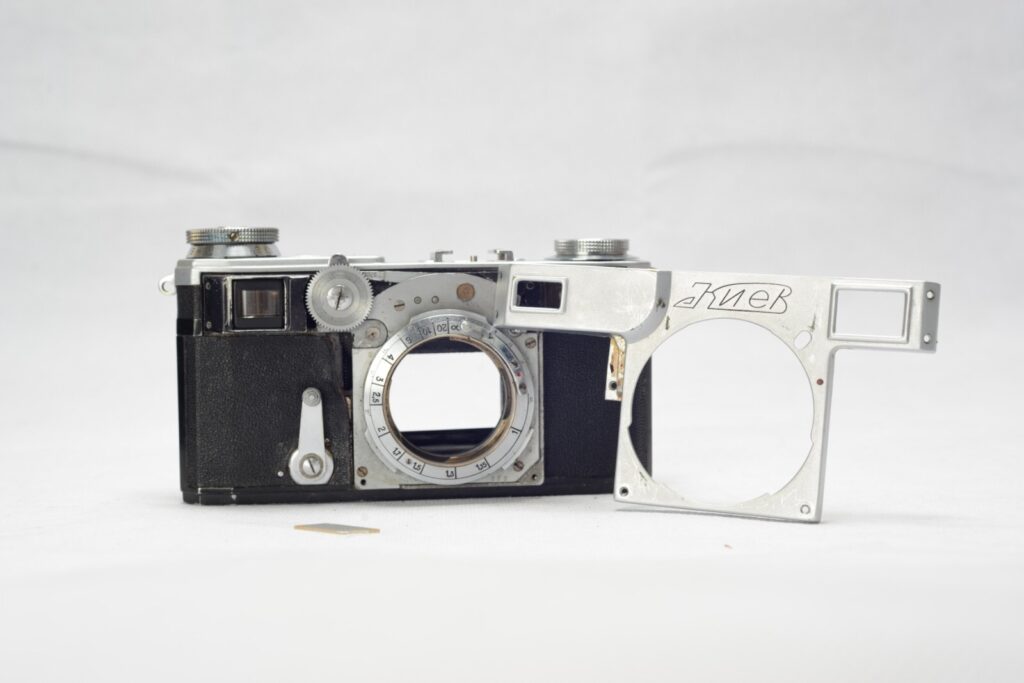
When the front plate of an early camera is removed, the reverse side can reveal the original Contax engraving impressed into the metal.
The front says Kiev.
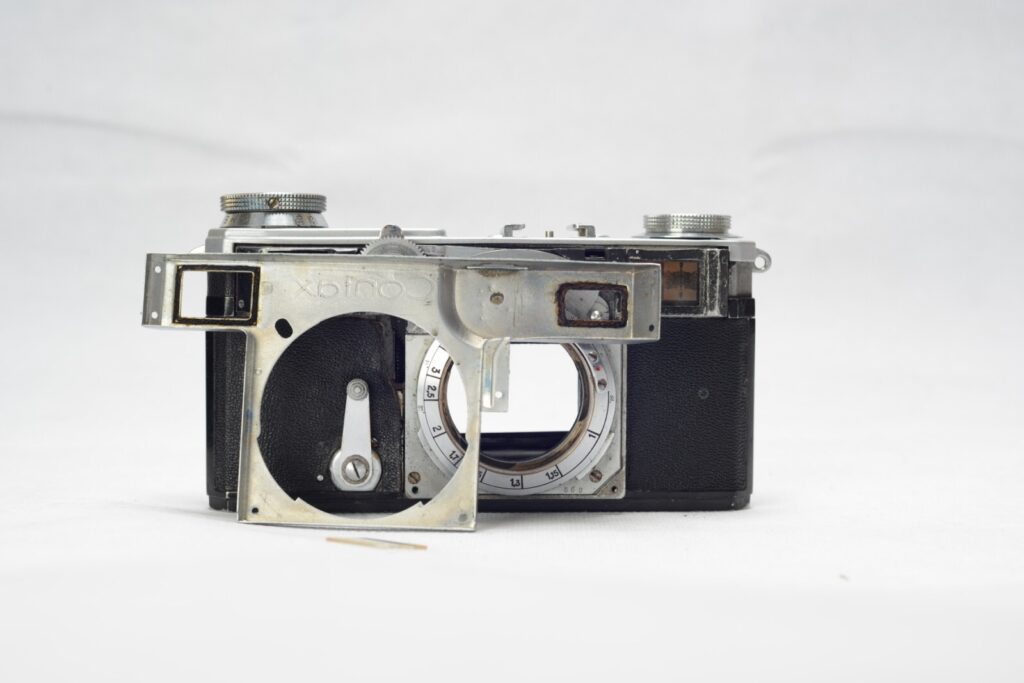
The metal underneath still remembers Contax.
This is one of the most fascinating details found on the earliest Kiev cameras, and the photographs accompanying this article show this feature on a camera from my collection.
From German Components to Soviet Production
The transition from German components to locally manufactured parts did not happen overnight.
The Arsenal factory had to rebuild the production process in Kyiv and begin manufacturing the complicated components itself. German engineers and technicians who had survived the war became extremely important during this period.
But there was a serious problem.
The war had scattered the people who had created the original Contax production. Some engineers had emigrated. Others had been mobilised and sent to the front. Some never returned.
Finding enough experienced specialists and bringing them together in Kyiv was therefore a major task.
At the same time, the Soviet Union was rebuilding its industrial base and working according to strict production plans. Factories were expected to increase output and meet deadlines.
After 1948, production increased year by year. More cameras were leaving the factory, while the quality began to decline gradually.
This was not a sudden collapse. It was a slow change.
And that is an important distinction.
The Quality of the Kiev-2
From my own experience with a large number of Kiev cameras, I consider 1958 to be an important turning point.
The decline had already begun before 1958, as production increased and the factory moved further away from the original German manufacturing process. But around 1958, the difference becomes much more apparent.
Earlier Kiev-2 cameras can still demonstrate remarkably high mechanical precision. Their machining, fitting and adjustment can be close to the standard expected from the original Contax production tradition.
After 1958, the decline becomes increasingly noticeable.
The cameras were being produced in greater numbers, while maintaining the same level of precision became more difficult.
The production equipment itself also played an important role. Machinery used year after year inevitably wears, and maintaining the original precision becomes increasingly difficult when equipment is no longer in its original condition.
By the early 1960s, machining was often visibly rougher. Edges were less carefully finished, surfaces could show more obvious machining marks, and burrs became increasingly common.
By 1964, in my experience, the word quality could almost be removed from the description of the production altogether.
The design was still there.
The Contax heritage was still there.
But the precision and finish of the early cameras had largely disappeared.
How to Date a Kiev-2
Fortunately, determining the year of manufacture of a Kiev-2 is relatively simple.
Look at the serial number.
The first two digits indicate the year of manufacture.
For example:
56839 = 1956
A Kiev with a serial number beginning with 47 was produced in 1947. A number beginning with 48 indicates 1948, 56 indicates 1956, and 58 indicates 1958.
This makes the serial number particularly useful when studying the development of the Kiev-2 and comparing cameras from different periods.
The History Written Into the Metal
The earliest Kiev-2 cameras are interesting because their history can actually be found inside the camera.
They represent the transition from German Contax production to Soviet photographic manufacturing in Kyiv.
The first cameras were built from German components and inherited the Contax design almost directly. Production was then gradually transferred to locally manufactured parts at the Arsenal factory.
After 1948, production increased year after year.
And as the numbers increased, the quality slowly declined.
For me, 1958 marks the point where this decline becomes particularly clear.
By 1964, together with the accumulated wear of the production equipment, the difference from the early cameras had become unmistakable.
That is why the early Kiev-2 is so important to collectors.
It is not simply a Soviet copy of a famous German camera.
It is a physical record of the moment when German precision engineering was transferred to Kyiv and transformed into Soviet mass production.
And sometimes the evidence is still there, hidden beneath the surface.
Remove the front plate of an early Kiev-2, and the word Contax may still be waiting on the other side of the metal.
A camera called Kiev.
A mechanism born from Contax.
And a piece of industrial history preserved inside the metal.