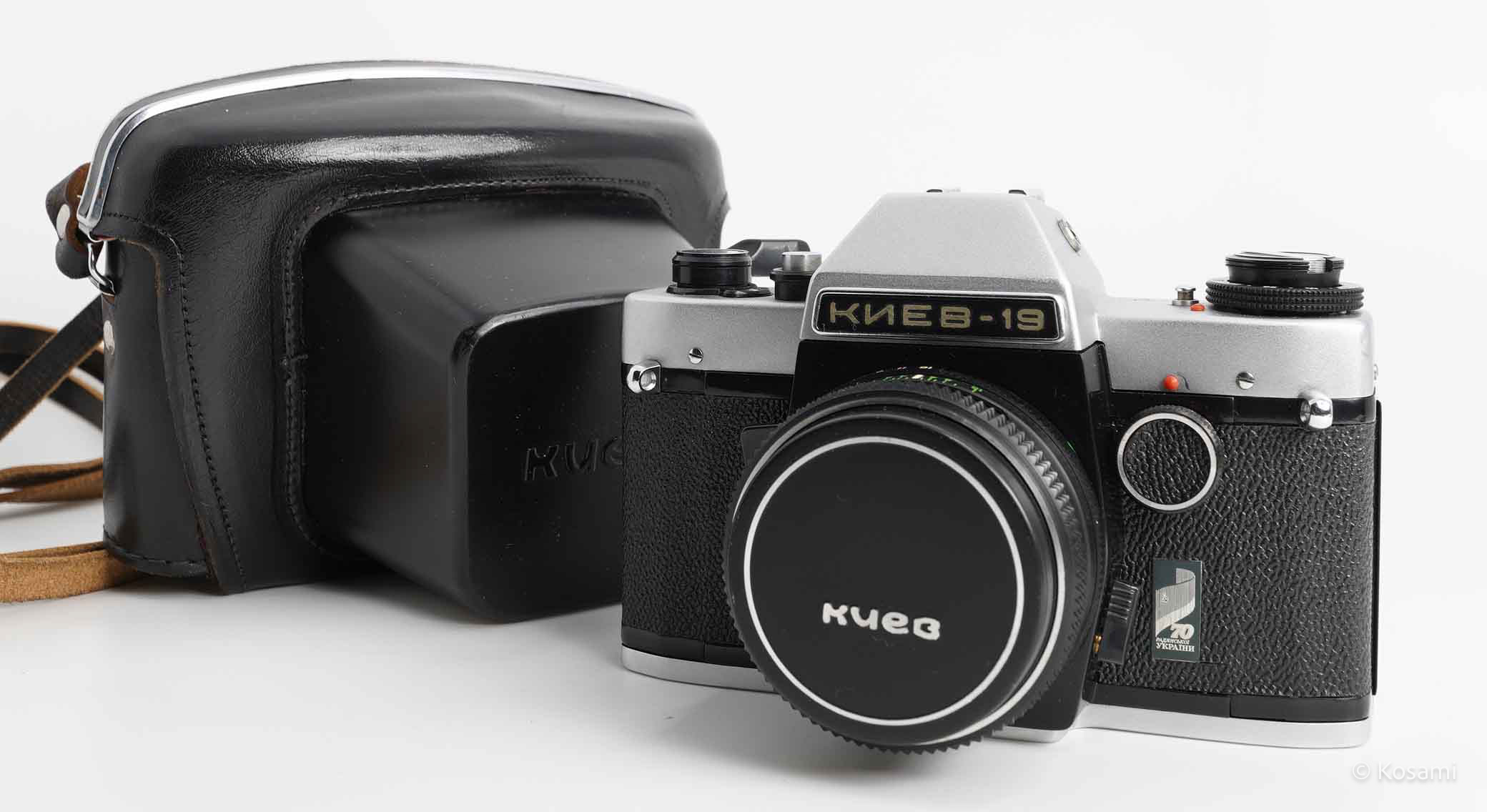
Now Reading: The 1958 Ukrainian “Kyiv” Camera: A Short Run, a Long Shadow
-
01
The 1958 Ukrainian “Kyiv” Camera: A Short Run, a Long Shadow


There are cameras that are rare.
And there are cameras that are rare for a reason.
In 1958, at the legendary Arsenal Factory in Kyiv, a small batch of cameras left the assembly line with something unusual engraved on their top plates. Instead of the standard Russian spelling “Киев,” they bore the Ukrainian form — “Київ.”
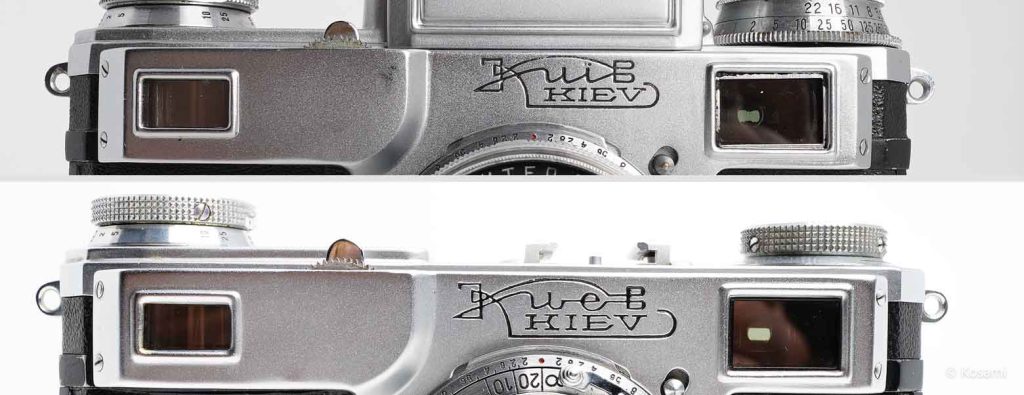
One letter difference.
An entire political context behind it.
What Exactly Was Produced in 1958?
By the late 1950s, the Kiev line was already established. The factory was producing rangefinders derived from pre-war German tooling, and the brand name “Kiev” was well known across the Soviet bloc. Models such as the Kiev-3 and its successors were standard production items.
But in 1958, a limited run appeared with Ukrainian-language branding on the camera’s nameplate. Surviving examples confirm that this was not a later modification — the engraving, typography, and finish are factory original.
Collectors generally agree on three points:
- The production run was extremely small.
- The cameras were made only in 1958.
- Very few survived.
The reason most often cited is political sensitivity. In the Soviet Union, branding was centralized and standardized. A Ukrainian-language inscription on a mass-produced consumer product was highly unusual. According to collector documentation and oral histories within the Soviet camera community, the batch was withdrawn shortly after release. Many units were reportedly destroyed.
Hard archival proof remains scarce — which only adds to the mystique. But the statistical evidence is undeniable: genuine surviving examples are exceptionally rare.
Why 1958?
The timing is important.
1958 marked the 40th anniversary of the Ukrainian Soviet Republic. Some researchers suggest the Ukrainian-inscribed cameras may have been connected to a commemorative or presentation initiative. Others believe it may have been an experimental branding decision that quickly ran into ideological boundaries.
In the Soviet system, subtle linguistic distinctions could carry political weight. “Київ” was more than orthography — it was identity.
And identity was regulated.
Why So Few Survived?
Mass destruction stories circulate widely in collector circles. While full factory documentation has not surfaced publicly, the disappearance pattern suggests centralized withdrawal rather than simple attrition.
Typical Kiev cameras from the late 1950s are common.
The Ukrainian-inscribed 1958 version is not.

That difference speaks louder than speculation.
What Makes It Important Today?
This camera is not just rare because of numbers.
It represents:
- A deviation from Soviet branding uniformity
- A moment of Ukrainian linguistic visibility
- A production decision that appears to have been reversed
- A surviving artifact from a politically sensitive era
For collectors of Soviet photographic equipment, the 1958 “Київ” is not just another variant. It is a documented anomaly.
A factory-made exception.
A one-year statement.
And today — one of the most elusive pieces ever to carry the Kyiv name.