Now Reading: The Soviet “Leica” That Vanished: The FED Prototypes of 1932–33
-
01
The Soviet “Leica” That Vanished: The FED Prototypes of 1932–33
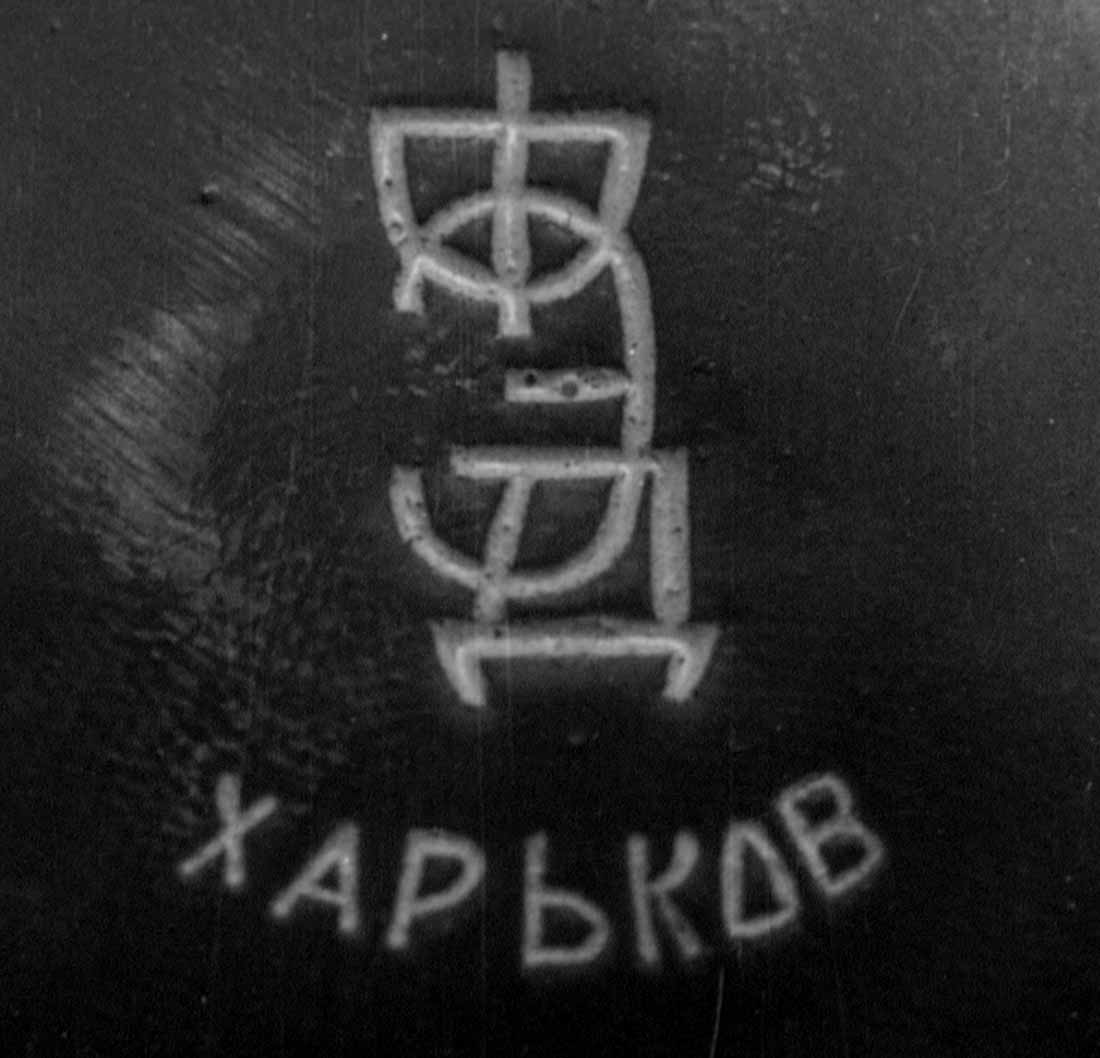

FED 001
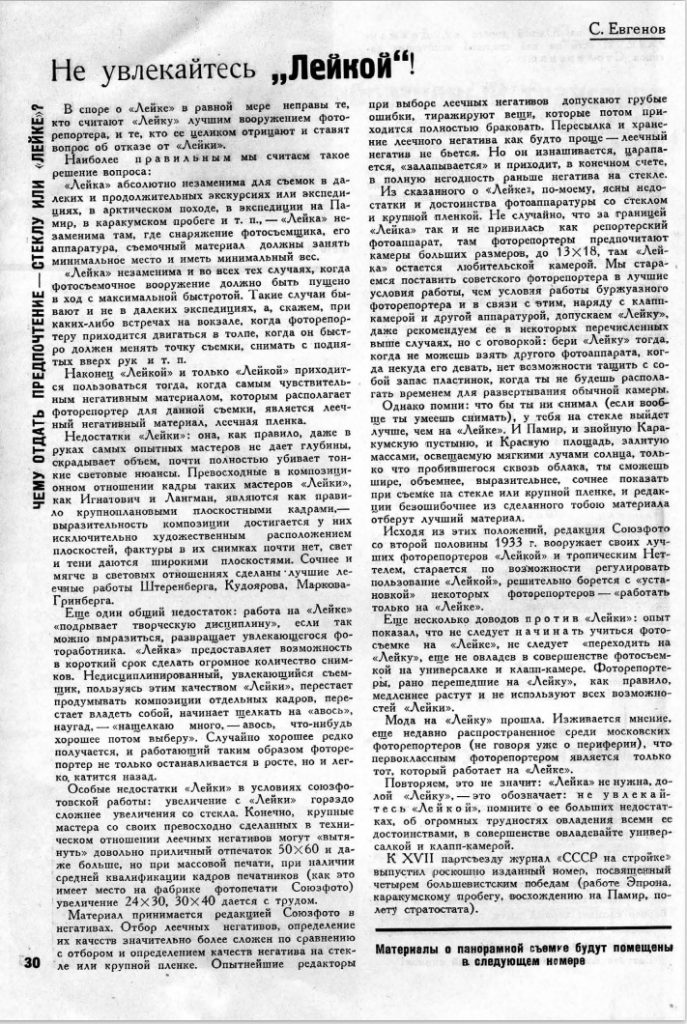
In the early 1930s the Soviet Union faced an awkward reality: the most desirable small-format cameras were foreign, expensive, and scarce. The Leica—compact, fast, and modern—had become the benchmark. Soviet photographic journals of the time didn’t hide that comparison. In fact, they leaned into it so hard that they literally titled articles:
- “There Is a Soviet ‘Leica’” (A. Agich)
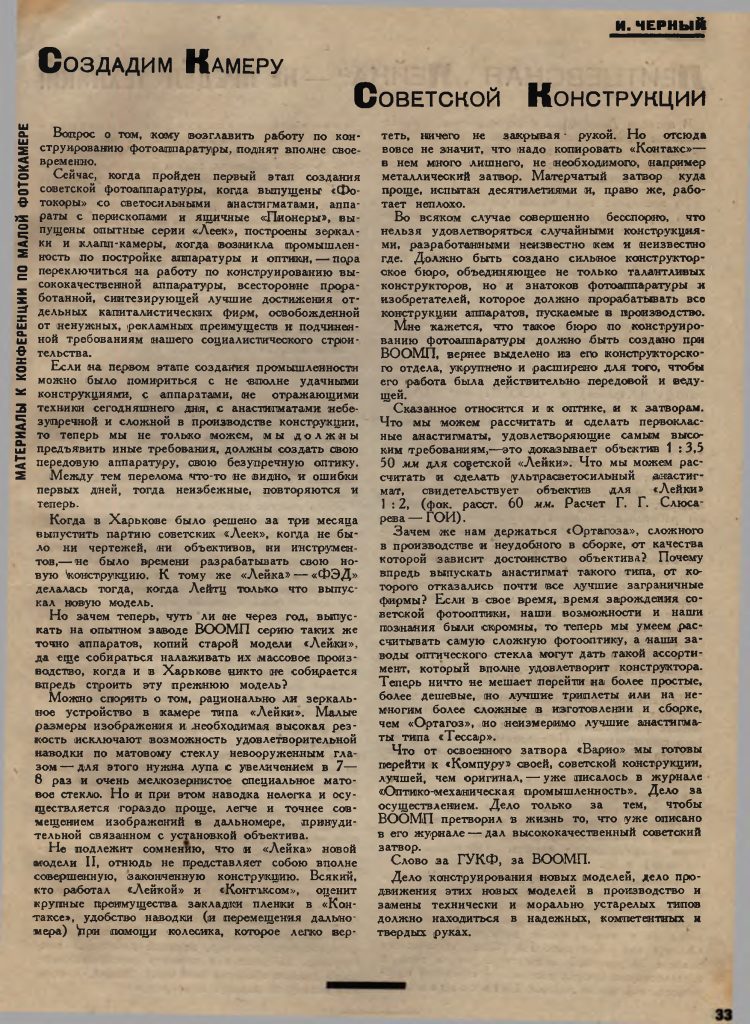
- “The Birth of the Soviet ‘Leica’” (I. Cherny)
- “Pros and Cons of the Soviet ‘Leica’” (A. Agich)
- “The Leitz ‘Leica’ Is Not the Limit of Technology!” (S. F.)
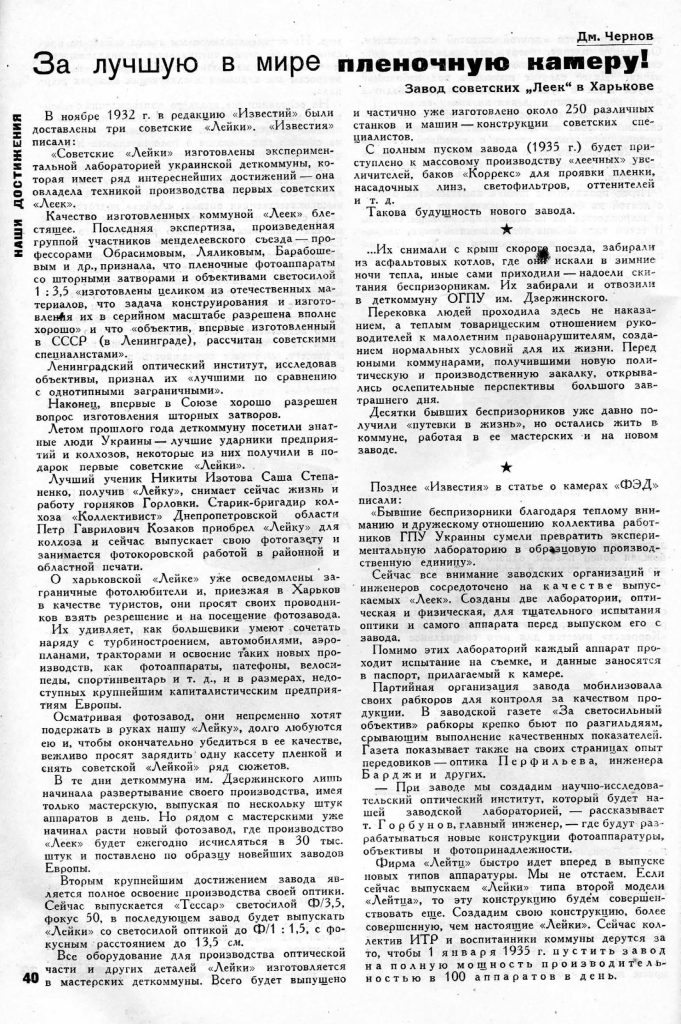
- and even “For the Best Film Camera in the World! The Factory of Soviet ‘Leicas’ in Kharkov” (Dm. Chernov)
This wasn’t just marketing. It was a public, printed signal of a political and industrial decision: the USSR would build its own Leica-class camera—quickly—and prove it could match the West not only in heavy industry, but in precision instruments.
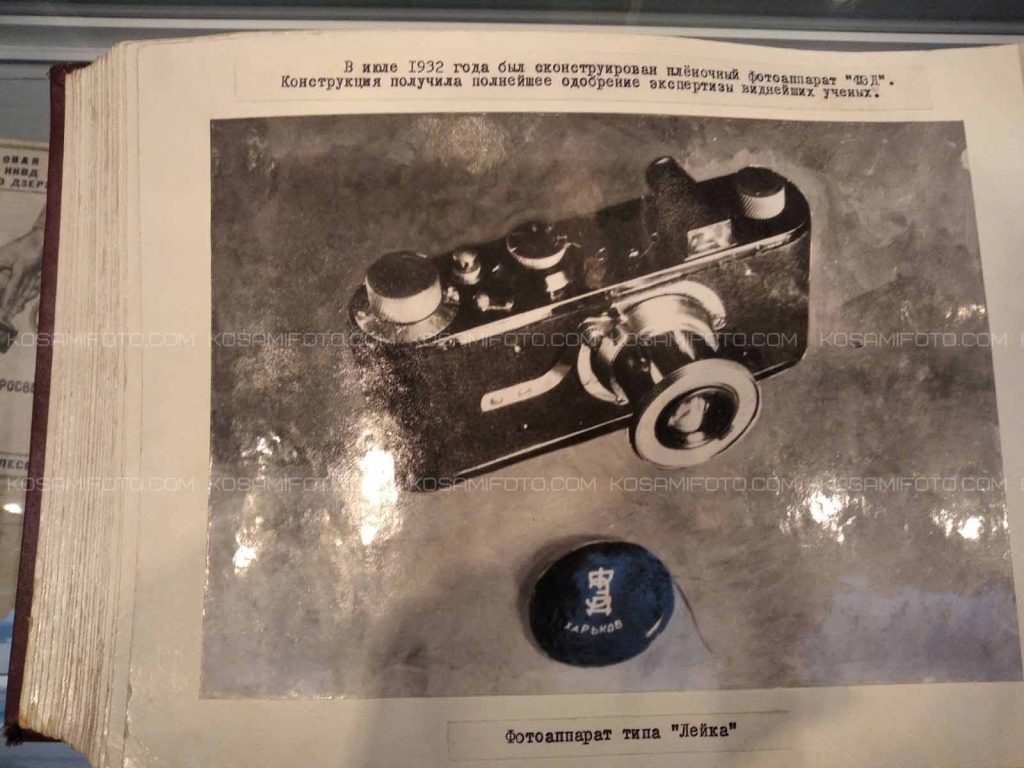
What makes the story extraordinary is that the earliest FED batch—commonly discussed as roughly 30 experimental cameras from 1932–33—appears to have disappeared almost completely from the material world. No museum piece. No verified surviving example in collector circles. Not even the usual trail of serial numbers and “I saw one once” folklore that surrounds other rare cameras.
I’ve been researching this question for about ten years, and this is the most logical reconstruction I can make—built primarily from period clippings like the ones you see in those 1932–34 magazine pages.
1) A political camera, not just a new product
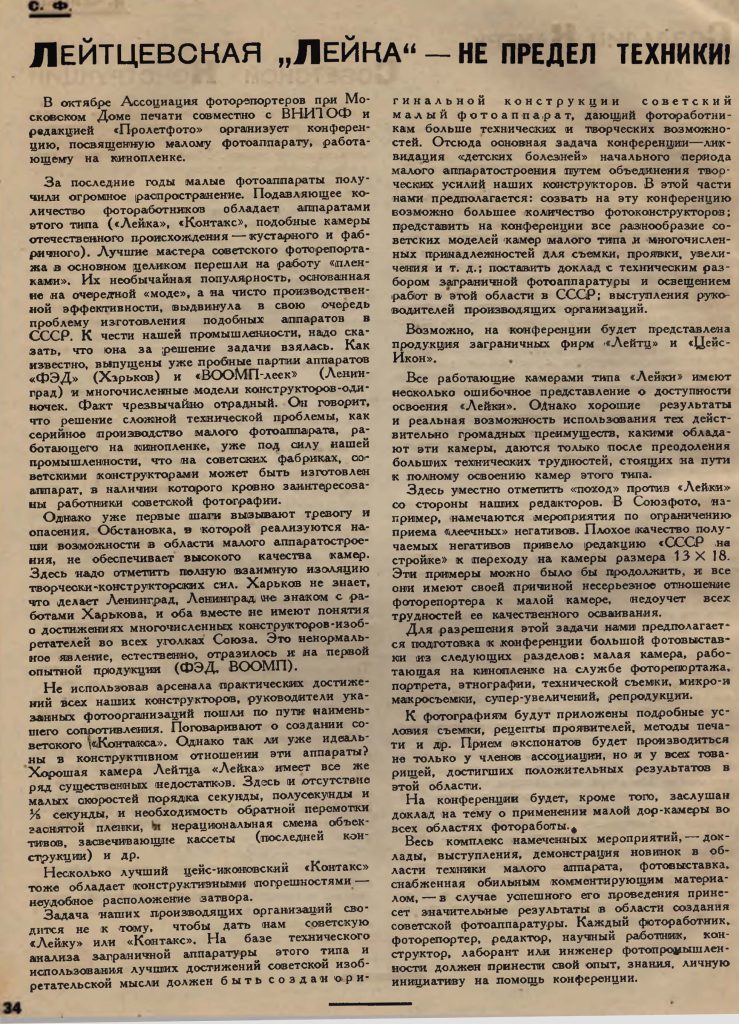
One 1933 appeal printed alongside the “Soviet Leica” coverage framed the project as both political and practical: the creation of a domestic Leica-type camera mattered to the state, to the press, and to the growing professional class of photographers.
That political framing matters, because it explains two things at once:
- why the Leica comparison was used so openly in print early on, and
- why that same comparison later becomes uncomfortable—something the system would rather rename, standardize, and control.
In short: this wasn’t merely “we made a camera.” It was we made the camera the world respected.
2) Three competitors—yet one winner
In the early Soviet small-camera race, collectors today usually name three competing lines:
- FAG
- Pioneer
- FED
What the period press makes clear is that the decisive breakthrough—what the journals loudly celebrated as the first Soviet Leica-type success—was achieved in Kharkov, inside a very unusual institution: the Dzerzhinsky Labor Commune.
And here’s the key point I want English-language readers to understand:
The “winner” wasn’t a conventional factory or private firm. It was a state-backed labor commune—associated in popular memory with educator Anton Makarenko—that operated workshops capable of surprisingly high-precision work.
The press treated this as symbolic: the USSR could turn social engineering into industrial engineering.
3) Reverse-engineering the Leica—an almost literal copy
The 1933 technical narrative is blunt: they took a foreign Leica, disassembled it, and used it as the reference point for a Soviet build.
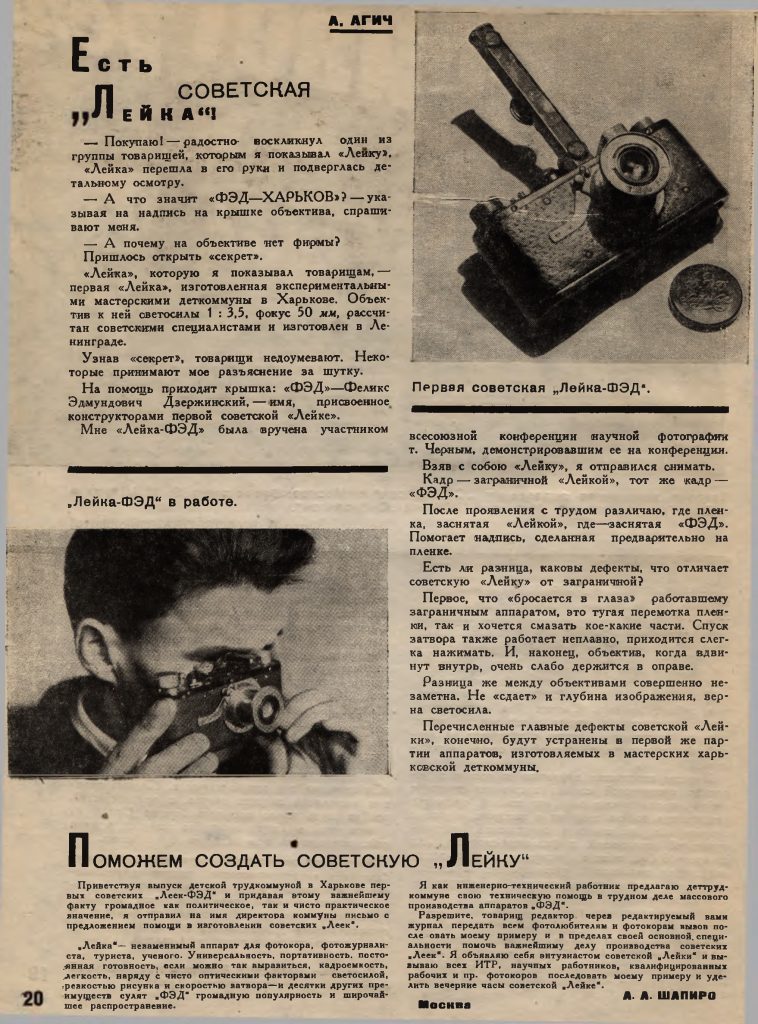
- In one article, the author describes showing the camera to friends who ask about markings like “FED—Kharkov”and why there is no “firm name” on the lens.
- The explanation given: this was an experimental Leica-type camera built in Kharkov, with a 50mm f/3.5 lens—designed and manufactured with Soviet participation, including work tied to Leningrad institutions and optical production.
Even the name is explicitly explained in print:
FED = Felix Edmundovich Dzerzhinsky
…a designation intended to anchor the camera inside Soviet symbolic space, not German branding.
Early on, journals freely wrote it as “Leica-FED” or “Soviet Leica-FED.”
4) The lens: “Soviet Elmar,” Tessar logic, GOI precision
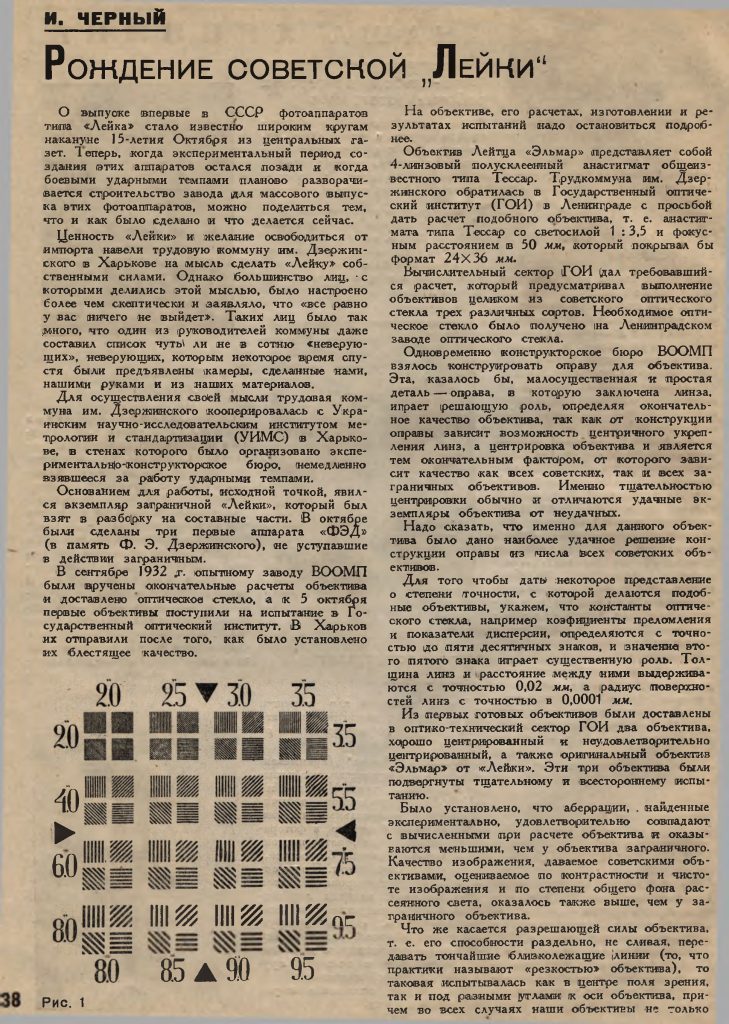
The most fascinating part of the clippings is how much attention they give to the optics.
Period technical text describes the reference lens and target class in very specific terms:
- a Leica-style lens comparable to Leitz designs (the articles discuss Elmar and a Tessar-type 4-element concept),
- aimed at the 24×36mm format,
- and developed with testing and calculation associated with the State Optical Institute (GOI).
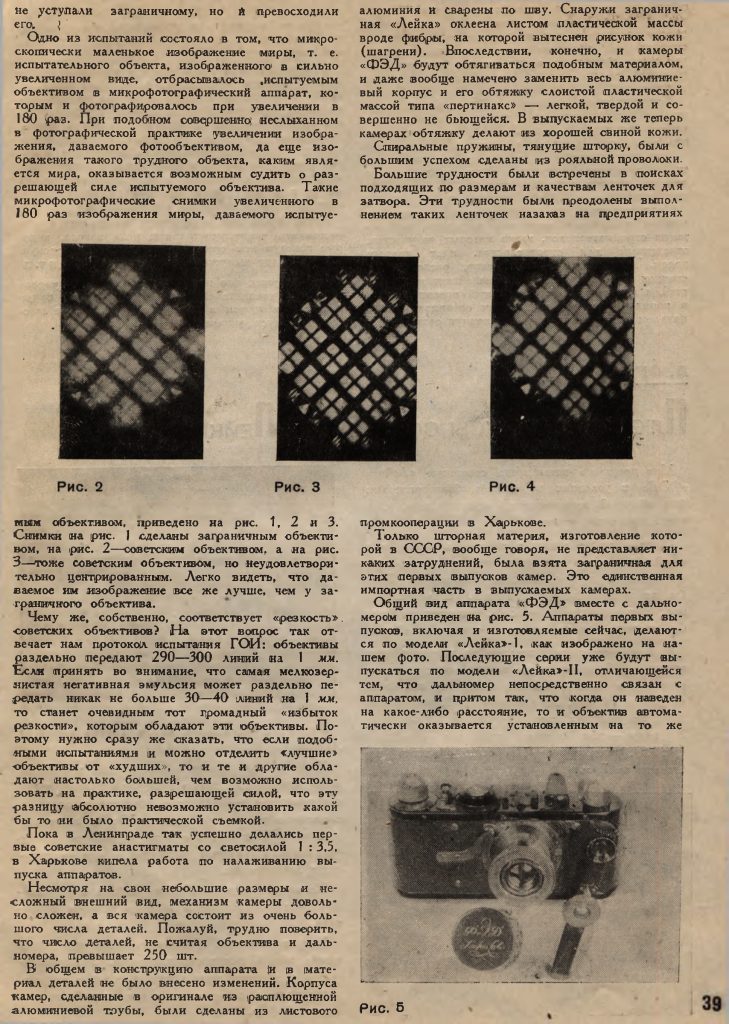
One passage emphasizes tolerances (down to hundredths of a millimeter for spacing, and extremely tight surface/radius controls), and describes how centring (alignment) of lens elements was a decisive factor separating good copies from bad ones.
In other words: the Soviet press wasn’t claiming “we made something similar.” It was saying:
we can compute it, manufacture it, align it, test it—and compete optically.
5) Field tests: “You can’t tell which negatives are which”
A. Agich’s 1933 evaluation reads like a direct challenge to Leica prestige.
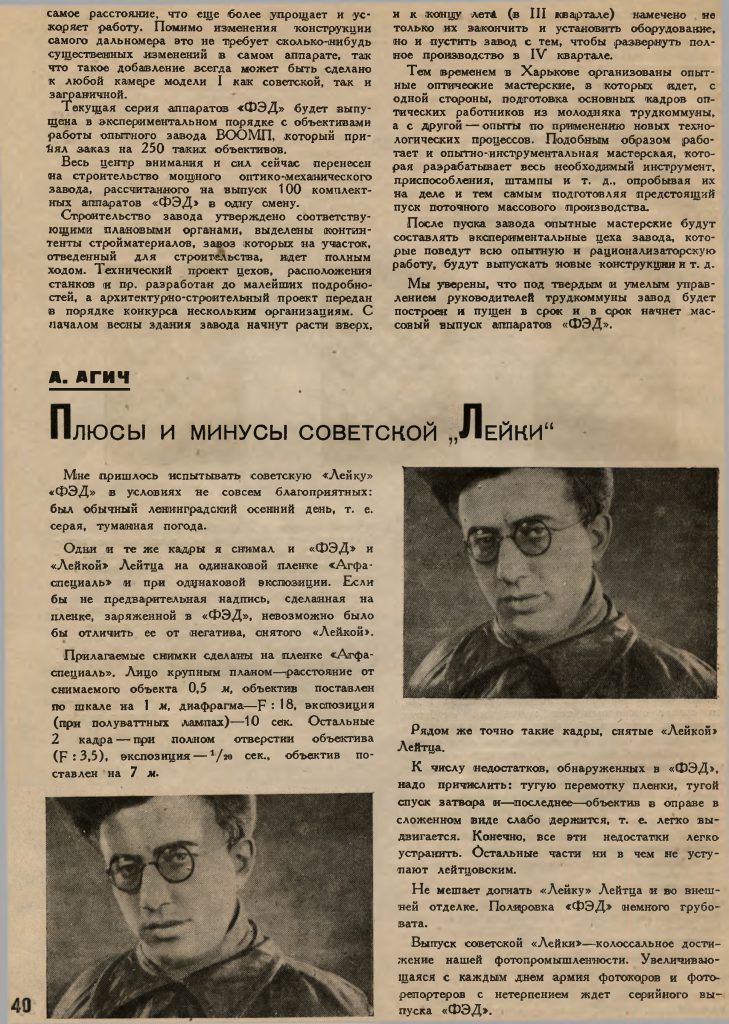
He describes shooting the same scenes on the same film, under the same exposure conditions, with a Leica and with the Soviet Leica-type FED. His conclusion is strikingly confident:
- Without a special identifying mark on the FED film, it would be extremely difficult to distinguish which negatives came from which camera.
He does note problems—important ones:
- stiff film advance / rewind
- a heavy shutter release
- a lens mount that doesn’t hold as firmly as it should
- rougher finishing / polishing
But the core message is consistent across multiple clippings:
Mechanically rough in places—yet photographically competitive.
6) The “30 cameras” and the detail that gives them away
A 1934 notice gives us one of the cleanest factual anchors in this entire story:
- it states that the first 30 experimental cameras (released in 1933) had a notable flaw:
the rangefinder was not coupled to the lens (i.e., it was “separate from the objective”).
That single sentence is gold for researchers, because it defines a very specific, testable characteristic that would identify an early experimental FED if one ever surfaced.
And then the same 1934 text pivots immediately to scale:
- claims of thousands of Soviet Leica-type cameras planned for 1934,
- and broader industrial momentum around the Kharkov production base.
So on paper, the story goes from “30 prototypes” to “mass production” very fast.
7) And then… the vanishing act
Here is the central mystery, and the point of this article:
Despite the loud press coverage, the earliest “Soviet Leica-FED” batch appears to have left no confirmed physical survivors.
Yes—there are press photos and illustrations in the 1933–34 magazines. But what I mean (and what collectors mean) is this:
- no verified camera in a museum catalog
- no confirmed example in major private collections
- no reliable auction appearances
- no clear serial number registry tied to those early prototypes
That absence is not normal.
Because we have a built-in comparison:
Pioneer and FAG cameras do survive.
They are known in the collector market, and examples surface—especially through European auction ecosystems (Austria and Germany come up repeatedly in collector discussions). They are rare, but they exist.
The early FED batch doesn’t behave like “rare.” It behaves like “removed.”
8) Why would a state celebrate “the Soviet Leica” and then erase it?
The clippings themselves hint at the transition:
- early print rhetoric proudly says “Soviet Leica”
- later print increasingly standardizes around “FED” as the proper name and identity
- the system’s industrial narrative shifts from “we copied Leica” to “we built FED”
That alone doesn’t prove destruction. But when you combine it with the total absence of surviving early examples, the most plausible explanation looks like this:
- the prototypes were politically useful as a proof-of-capability story,
- then they became politically inconvenient as a too-obvious copy narrative,
- and the earliest batch was likely withdrawn, recycled, or quietly eliminated during standardization and transition into serial production.
I can’t claim a single archival document that says “they were destroyed” in one line—period publications rarely speak that plainly. But the pattern is difficult to ignore: the cameras vanish, and the name changes.
9) Why this matters
If you care about camera history, this isn’t just a Soviet curiosity. It’s a case study in how technology, propaganda, and industrial policy intertwine.
The early FED story is one of the clearest examples where a camera is treated not primarily as a consumer object, but as:
- a prestige weapon
- a proof of national competence
- a state narrative
And the disappearance of the first batch—if confirmed—would be just as political as its creation.
10) A call to collectors and archivists
If any early FED prototype ever surfaces with characteristics matching the descriptions in the 1933–34 clippings—especially that rangefinder separation detail—it would be a historical event.
If you’re reading this as a collector, curator, or archivist, here’s what would count as meaningful evidence:
- a camera with credible provenance back to Kharkov / the Commune
- early engravings/markings consistent with “FED—Kharkov” era descriptions
- mechanical layout consistent with the “Leica I model” framing
- any documentation tying serials or workshop inventory to those early runs
Until then, the “Soviet Leica-FED” of 1932–33 remains one of the strangest missing objects in 35mm camera history: loudly announced to the world—then apparently erased from it.
– Amanaliiev Kostiantyn 2026