Now Reading: Selena – Селена (LOMO): A Rare Artifact of Soviet Optical Thought
-
01
Selena – Селена (LOMO): A Rare Artifact of Soviet Optical Thought
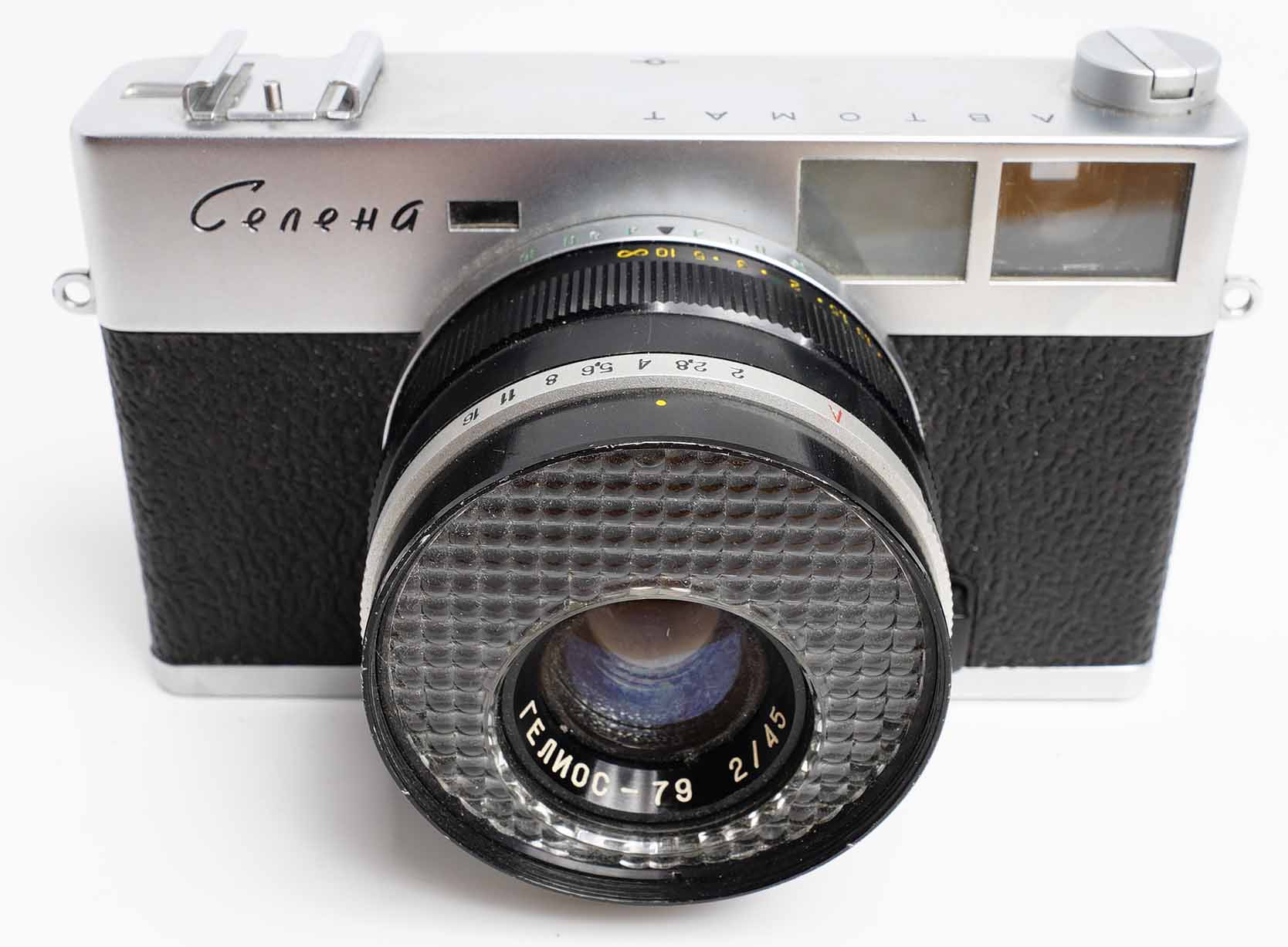

Selena – Селена (LOMO): A Rare Artifact of Soviet Optical Thought
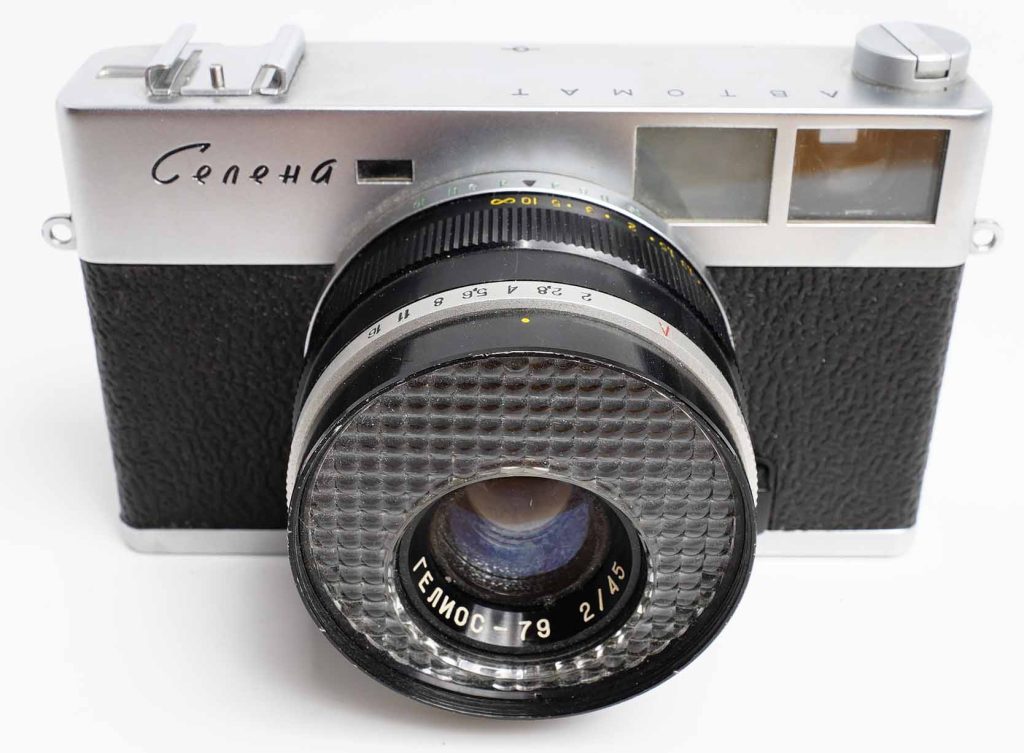
In the vast and often underappreciated landscape of Soviet photographic engineering, certain devices emerge not merely as tools, but as intellectual artifacts—embodying a synthesis of industrial pragmatism and experimental ambition. Among these stands the Selena camera of the Leningrad Optical-Mechanical Association (LOMO), a device whose rarity today is matched only by the conceptual curiosity it once represented.
Historical Context
The Selena family of cameras was produced in the mid-to-late 1960s at LOMO, one of the principal centers of optical innovation in the USSR. These cameras—particularly the Selena (1965) and its later derivatives such as Selena-Automat—occupied a transitional niche between simplified amateur devices and more technically ambitious automated systems.
This was a period when Soviet industry sought to reconcile two competing imperatives: accessibility for the массовый фотолюбитель (mass amateur photographer), and the integration of increasingly sophisticated optical and exposure mechanisms. The Selena thus becomes emblematic of a broader technological dialectic—simplicity versus automation.
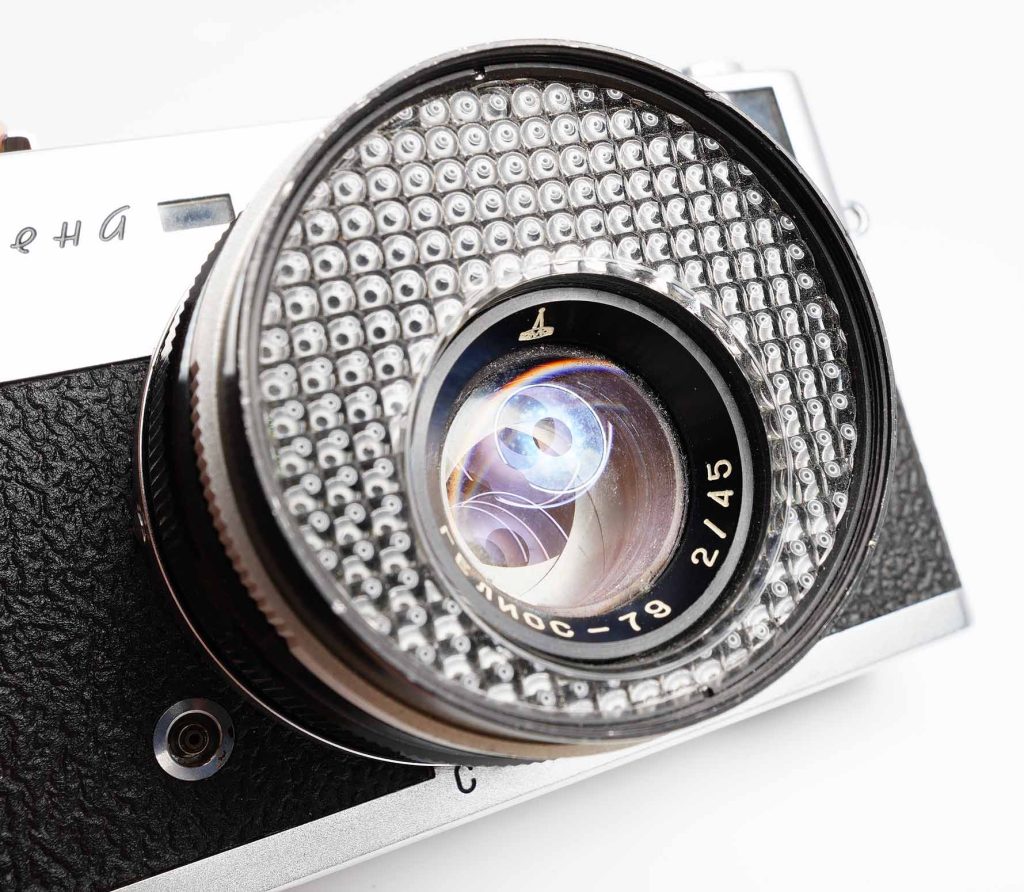
Notably, some variants of the Selena were equipped with relatively fast lenses such as the Industar-73 (f/2.8) or even the more ambitious Helios-79 (f/2), paired with central shutters offering speeds up to 1/500 second.
Such specifications, while modest by professional standards, represented a significant step forward for compact Soviet cameras of the era.
Design Philosophy and Construction
The external design of the Selena reflects a restrained modernism typical of LOMO’s mid-century products. Its geometry is deliberate, almost didactic—eschewing ornament in favor of clarity of function. Yet beneath this austerity lies a surprisingly intricate internal logic.
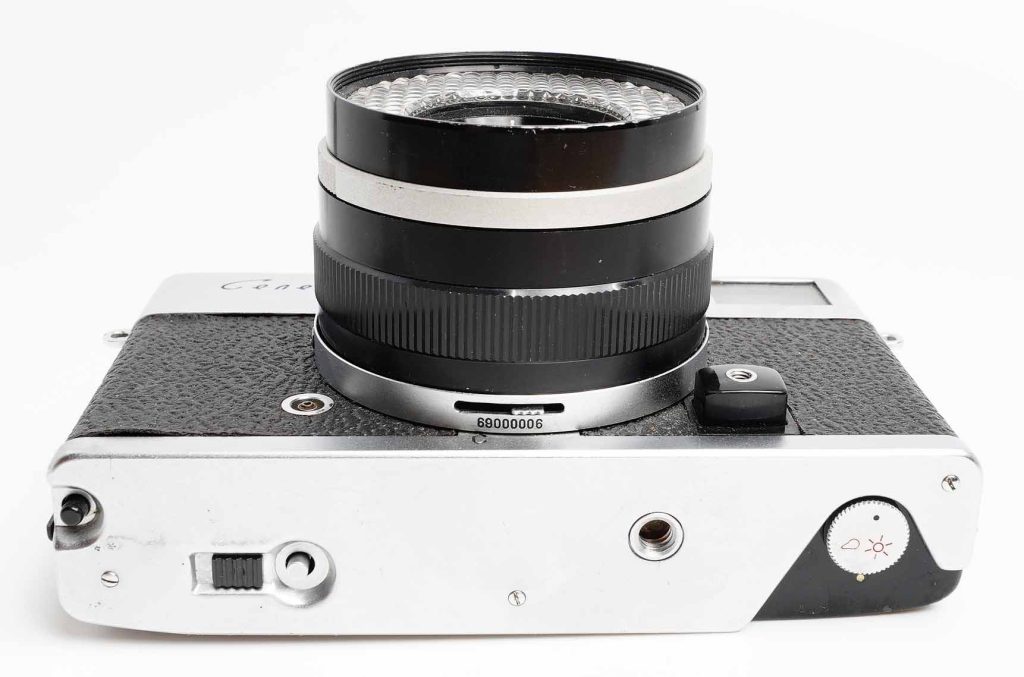
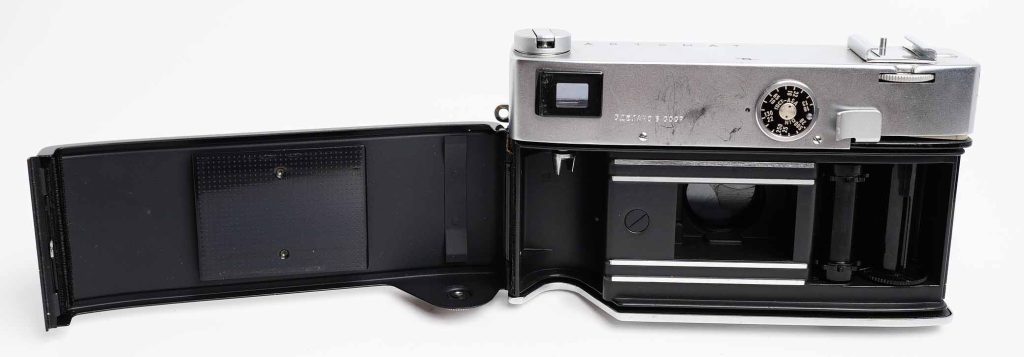
One of the most fascinating elements—often overlooked even by seasoned collectors—is the construction of the rear door. Unlike the more conventional hinged or latch-based systems found in contemporaneous cameras, the Selena employs a dual-action mechanism:
to open the back cover, one must simultaneously press a button and slide a dedicated latch.
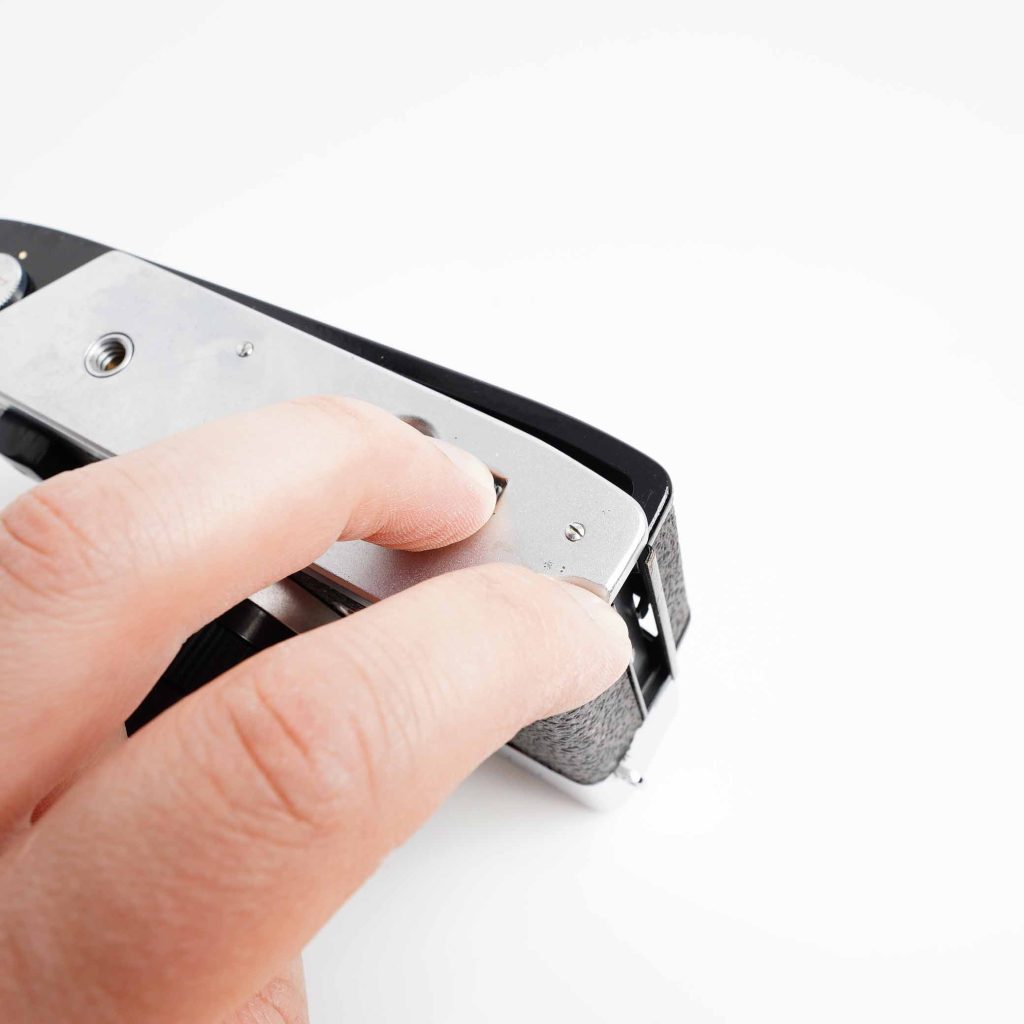
This requirement for coordinated motion is not merely a mechanical curiosity; it is a subtle safeguard against accidental opening—a nontrivial concern in an age of light-sensitive film and imperfect sealing technologies. The gesture itself—press and slide—feels almost ceremonial, reinforcing the tactile dialogue between user and machine.
Technical Character and User Experience
The Selena was designed for 35mm film (type 135), aligning it with global standards and ensuring compatibility with widely available materials.
Its operation, however, retains a distinctly Soviet pedagogical quality: the photographer is not insulated from the process, but rather invited to participate in it.
Focusing, exposure selection, and film advance demand attentiveness. In this sense, the Selena is less an automatic device than a didactic instrument—one that teaches photography through disciplined interaction.
Rarity and Collector Significance
Today, the Selena occupies a peculiar position in the collector’s hierarchy. It is neither as ubiquitous as the Smena series nor as internationally mythologized as the later LOMO LC-A. Instead, it exists in a liminal space—known to specialists, elusive to the broader public.
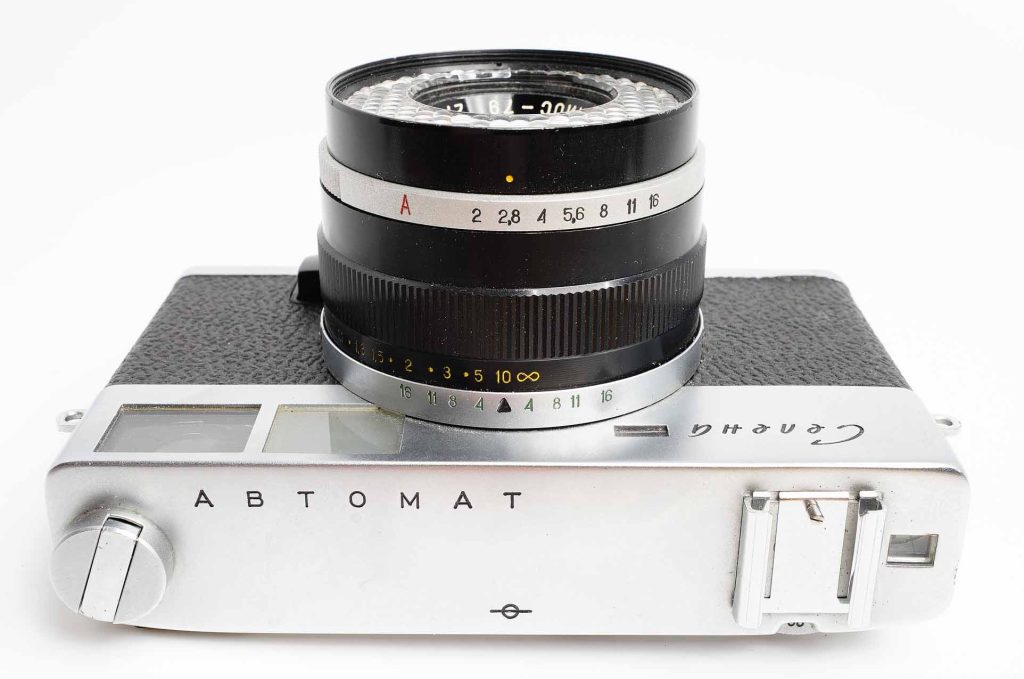
Its rarity is compounded by relatively short production runs and the fragility of certain components. Surviving examples often bear the marks of time, yet this patina only enhances their historical resonance.
Concluding Remarks
To study the Selena is to encounter a moment in which Soviet engineering briefly aligned technical aspiration with user-centered experimentation. It is a camera that resists reduction to mere specifications; instead, it invites interpretation—as an object, as a system, and as a cultural artifact.
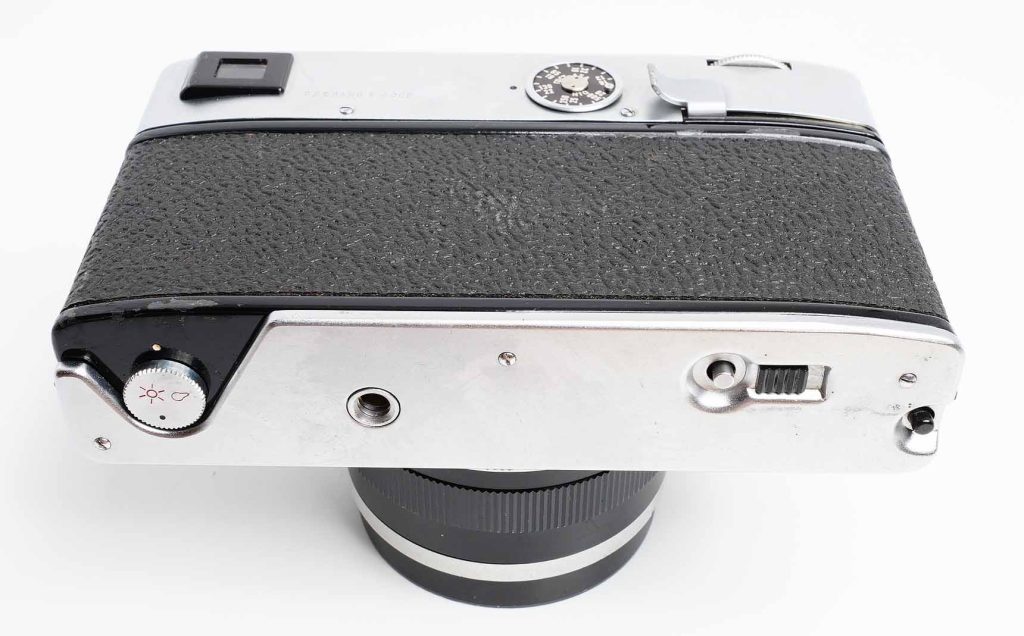
In the spirit of an academic observer, one might say: the Selena does not simply capture images—it captures a philosophy of making images, one in which constraint, ingenuity, and tactile engagement converge into a uniquely Soviet form of photographic expression.