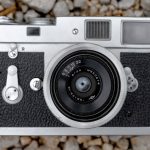
Now Reading: Leica M2 Review — The Pure Mechanical Leica
-
01
Leica M2 Review — The Pure Mechanical Leica
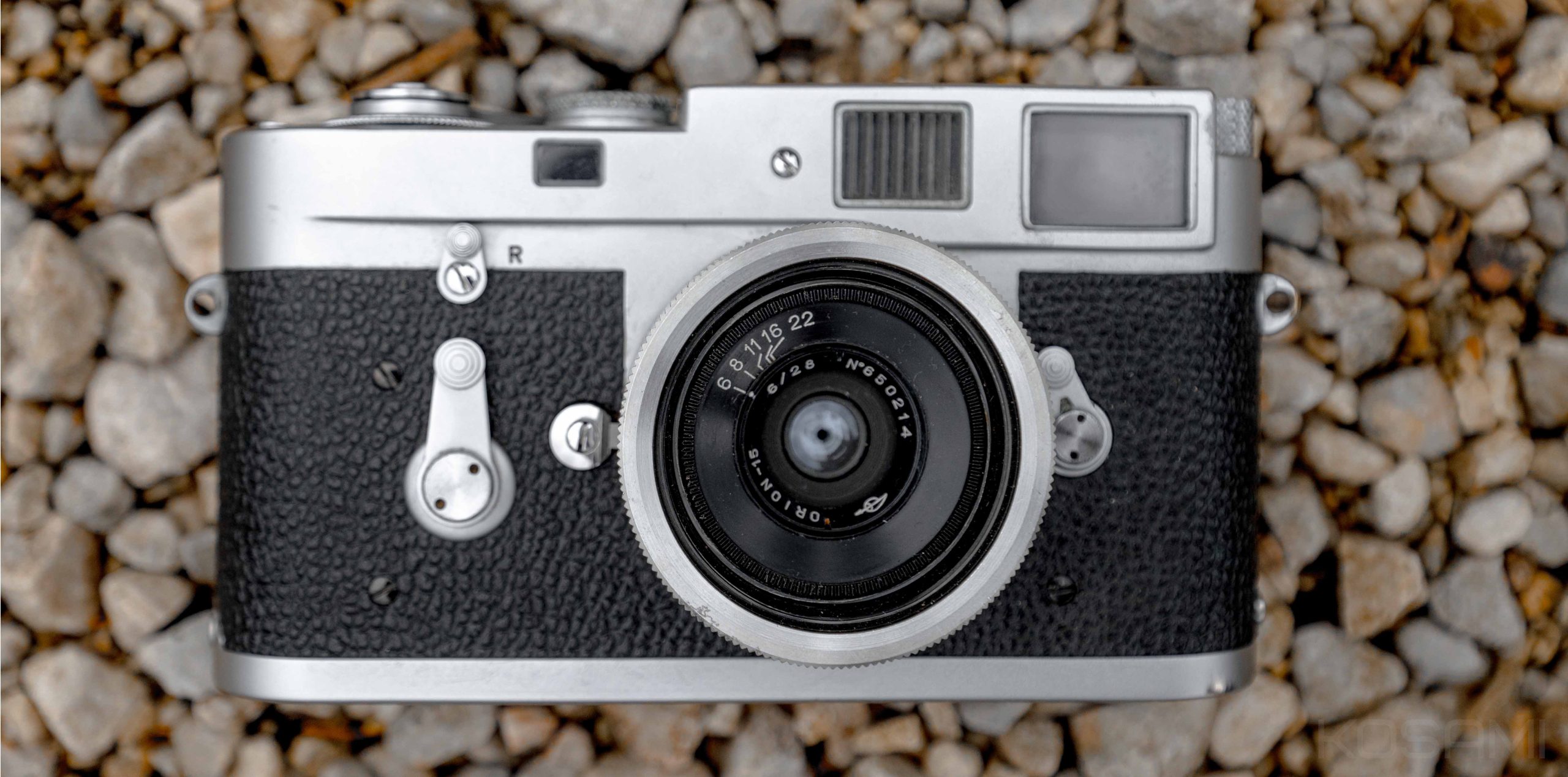

Today we’re looking at something that, on paper, makes absolutely no sense in 2026.
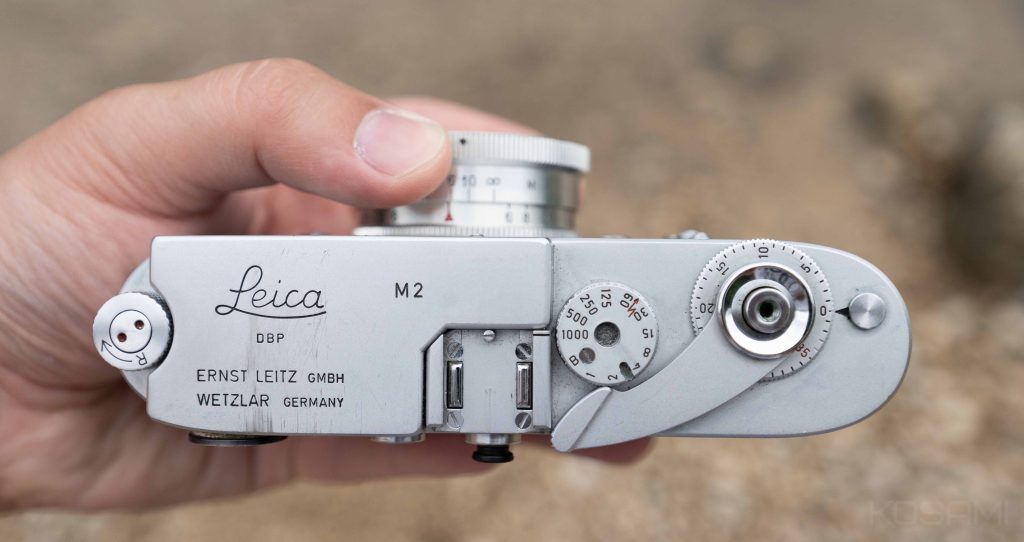
No autofocus.
No light meter.
No electronics.
No battery.
And yet the Leica M2 remains one of the most respected 35mm rangefinders ever made.
Let’s break down why.
Historical Context — Where the M2 Sits in Leica’s Evolution
To understand the M2, you need to understand what came before it.
In 1954, Leica introduced the Leica M3 — arguably the most refined mechanical rangefinder ever built. It was revolutionary:
- M-mount bayonet system
- Combined rangefinder/viewfinder
- Exceptionally long rangefinder base length
But the M3 was optimized primarily for 50mm lenses.
Then in 1957, Leica released the M2 — not as a downgrade, but as a practical evolution.
The M2 was built specifically with 35mm shooters in mind.
Core Specifications
Here’s what the Leica M2 actually is from a technical standpoint:
- Format: 35mm film (24×36mm)
- Lens mount: Leica M bayonet mount
- Shutter: Mechanical, horizontal-travel cloth focal-plane shutter
- Shutter speeds: 1 second to 1/1000 sec + Bulb
- Flash sync: 1/50 sec
- Viewfinder magnification: 0.72x
- Frame lines: 35mm, 50mm, 90mm
- Rangefinder base length: ~68.5mm (effective ~49mm)
No electronics. Entirely mechanical timing.
If the shutter fires, it fires because gears and springs say so — not firmware.
The Viewfinder — Why the M2 Changed Everything for 35mm
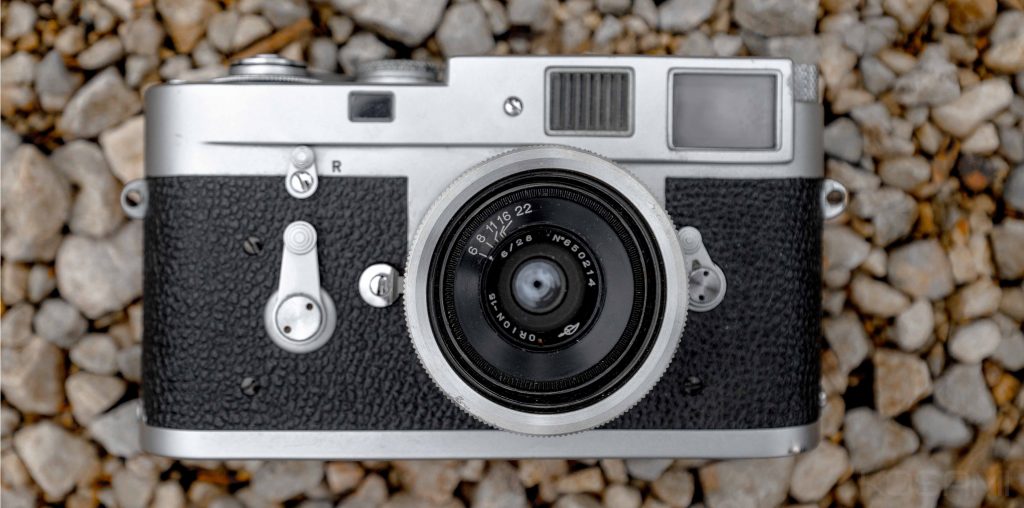
This is where the M2 gets serious.
The M3 had frame lines for:
- 50mm
- 90mm
- 135mm
But 35mm shooters had to use “goggles” or external finders.
The M2 introduced native 35mm framelines inside the viewfinder.
That made it the preferred body for street photography.
And the 0.72x magnification?
It became the standard for future M cameras.
Even modern digital M bodies still echo this configuration.
Build Quality — Mechanical Precision
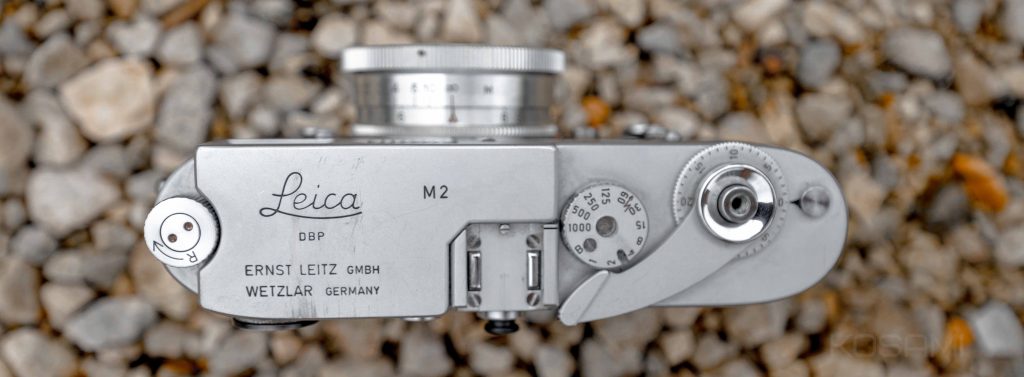
The M2 was produced from 1957 to 1968.
It was hand-assembled in Wetzlar, Germany by Leica Camera.
The shutter mechanism uses:
- Silk cloth curtains
- Mechanical drum timing
- Brass gearing
- Steel shafts
There is no planned obsolescence here.
Many M2 units still operate within factory shutter tolerances after 60+ years — provided they’ve been serviced.
The advance lever stroke is shorter and smoother than early M3 units. The rewind system is simpler and faster than screw-mount Leica bodies that preceded it.
This is industrial design optimized by iteration, not marketing.
Relationship to Later Leica Models
The M2 directly influenced:
- Leica M4 — which refined film loading and ergonomics
- Leica M6 — which finally added a built-in light meter
- Modern digital M cameras — which maintain the same M mount geometry
The M2 represents the “pure” mechanical phase of the M system:
M3 — precision flagship
M2 — practical wide-angle tool
M4 — ergonomic refinement
M6 — electronics enter the chat
The DNA is continuous.
Shooting Experience
Using the M2 forces you into deliberate photography:
- Manual focus via split-image rangefinder patch
- Manual exposure (external meter or Sunny 16 rule)
- Manual film advance
- 36 frames. That’s it.
The shutter sound is softer than most SLRs of its era because there is no flipping mirror.
No blackout.
No vibration from mirror slap.
Just a quiet mechanical release.
Limitations (And Why They Matter)
Let’s be realistic.
- No internal light meter
- No TTL flash
- 1/1000 max shutter speed
- Parallax correction is mechanical, not automatic beyond frame shift
- Film cost and development
And yet — none of those are design flaws.
They are design decisions.
The M2 was engineered around reliability, compactness, and speed for reportage.
Collector vs Shooter
The M2 sits in an interesting position.
It is:
- Less expensive than early M3 double-stroke models
- Often more practical for 35mm users
- Highly serviceable due to mechanical simplicity
It’s not rare. But it is respected.
Black paint versions? That’s another story.
Final Take
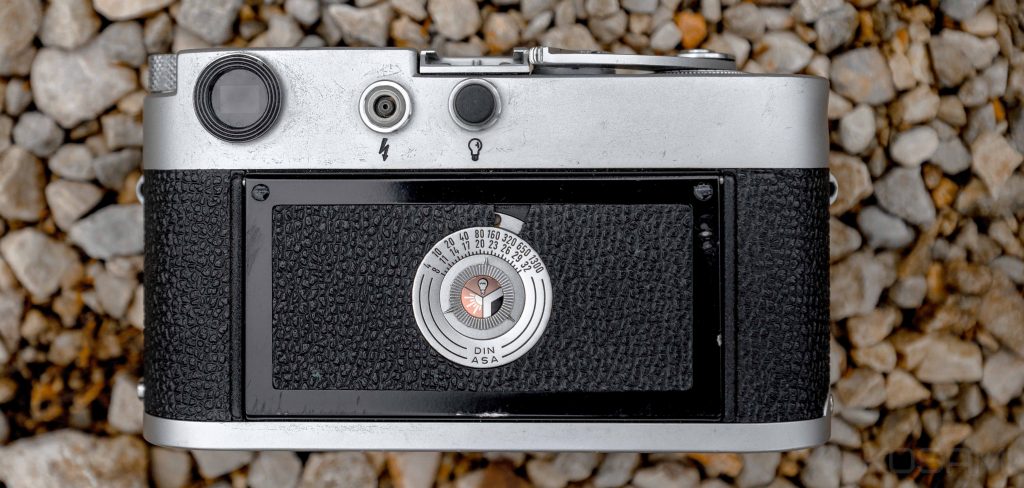
The Leica M2 is not about specs.
It’s about mechanical integrity and continuity.
It sits at a pivotal moment in Leica history — bridging the original M concept and the refinements that followed.
If you want automation, there are better tools.
If you want a fully mechanical 35mm rangefinder that defined an era — and still works today — the M2 is one of the cleanest expressions of what the Leica M system was meant to be.
And the fact that a 1957 camera can still compete in usability terms?
That says more about its engineering than any nostalgia ever could.